
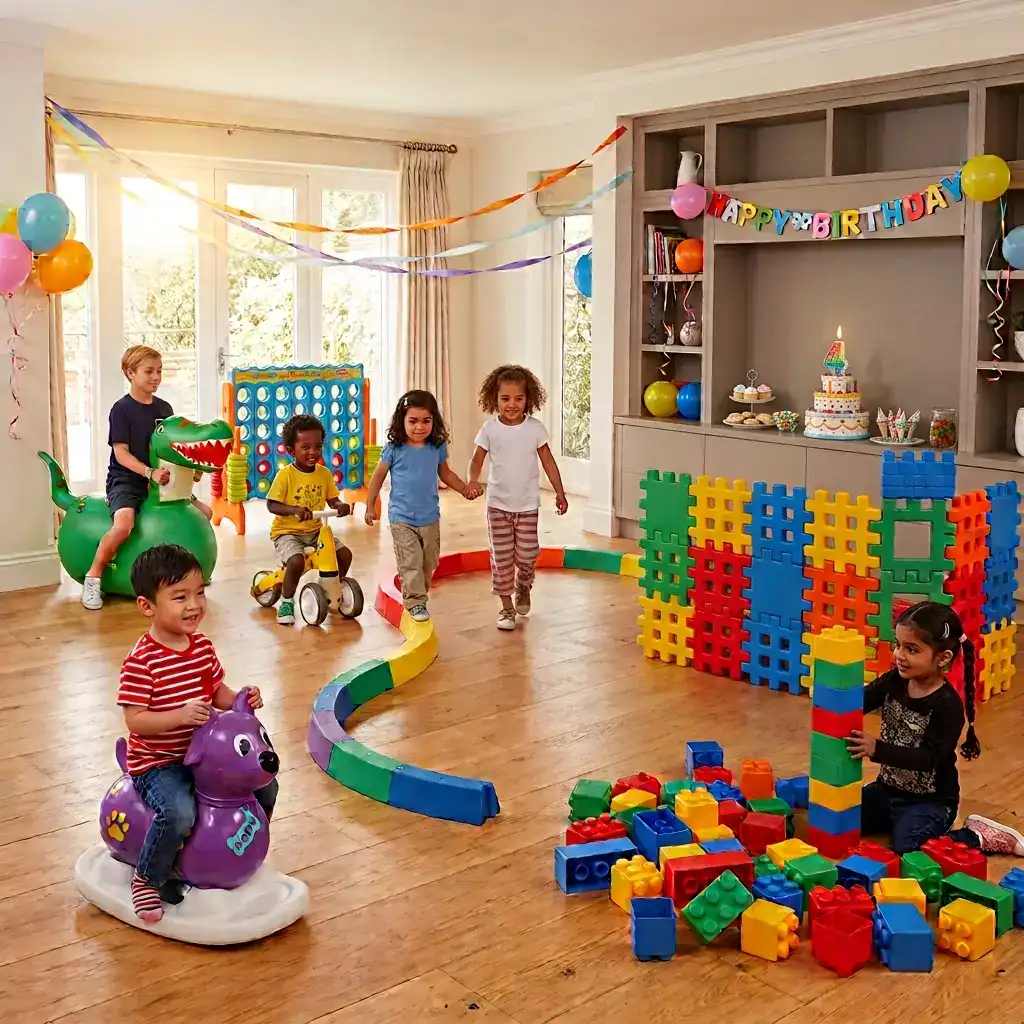
The best children’s parties are not usually the ones with the most activities. They are the ones where children know what to do, have room to enjoy themselves and stay happily involved while adults can relax. Learning how to choose party games starts with one simple question: what will help this particular group of children have fun together?
A game that is perfect for an energetic group of six-year-olds in a garden may be frustrating in a small hall, or far too lively for toddlers. Age, space, numbers and the rhythm of the day all matter. With a little planning, you can create a games mix that feels exciting for children and manageable for everyone organising the celebration.
Start with the children, not the game
It is tempting to begin with a favourite game from your own childhood, or something that looks impressive in party photos. But age range is the better starting point. Children develop quickly, and a two-year age gap can make a real difference to confidence, attention span and physical ability.
For under-fives, choose simple activities with no complicated rules and no pressure to win. Soft play, ride-ons, giant building blocks and gentle movement games give younger children freedom to explore at their own pace. They also work well for children who are still finding their confidence in a busy group.
For primary-age children, games with a clear challenge tend to work well. Think giant garden games, team activities, target games or building challenges. At this age, children often enjoy taking turns and working towards a goal, but the rules should still be easy to explain in under a minute.
Older children may enjoy more strategy, friendly competition and games that give them some independence. However, do not assume every child wants a high-energy contest. A good party offers a choice between active fun and calmer play, particularly when children do not all know one another.
If siblings or cousins of different ages will be there, create separate play zones rather than expecting one game to entertain everybody. Younger children can enjoy safe, low-level equipment while older guests take on a more challenging game nearby. This avoids the common problem of toddlers being knocked out of the way by enthusiastic bigger children.
How to choose party games for your venue
Your venue will shape the games you can use just as much as the children’s ages. Before booking or planning anything, measure the usable space. This is not always the same as the total room size. You may need to allow for food tables, presents, adults standing around the edge, pushchairs and a clear entrance.
A living room or compact community room benefits from activities that can be enjoyed in smaller groups. Giant building blocks, tabletop games, a contained soft play area or a carefully chosen selection of pick ’n’ mix toys and games can keep children engaged without turning the room into an obstacle course.
Larger halls give you more flexibility, but they still need a layout. Leave a clear route between activities and avoid placing fast-moving games beside food, doors or seating areas. If children are likely to run, make sure there is enough space for them to do so safely. A game becomes much more enjoyable when no one is constantly being asked to slow down or move away from the cake table.
Outdoor parties offer plenty of potential for giant garden games, relays and active challenges. The trade-off is weather. In London, it is wise to have an indoor alternative or a covered area, even in summer. Consider the ground too: uneven grass, muddy patches and hard paving can affect which equipment is suitable and how safely children can play.
Choose a balance of energy levels
A party does not need non-stop action from beginning to end. In fact, too many high-energy games can leave children overstimulated, hungry and less able to settle for food or the birthday moment.
Plan a natural flow instead. Start with an easy arrival activity so children have something to do while guests gather. Follow with a more active game once everyone has arrived, then bring the pace down for food or a quieter activity. A final game can give the group one last shared moment before collection time.
This balance matters especially for parties with younger children. Some will join in immediately, while others will need time to watch before taking part. Open-ended equipment such as soft play, building blocks and ride-ons gives children a comfortable way to enter the fun without being singled out.
For a two-hour party, it is usually better to have a few dependable options than a packed schedule. Allow time for children to repeat the games they love. The aim is not to race through a programme. It is to create enough variety that everyone finds something enjoyable.
Consider group size and waiting time
Many party games sound good until you picture 20 children waiting for one turn. Long queues lead to boredom, wandering and the occasional disagreement. When choosing games, think about how many children can take part at once.
Large groups are often best served by activities with several points of play, such as giant building blocks, soft play areas and a mix of garden games. These let children spread out and choose what interests them. For a structured game, split the children into smaller teams, or set up two versions side by side if space allows.
Competitive games can be great fun, but keep the stakes light. Elimination games, where children sit out after one mistake, are rarely ideal for younger guests. Adapt them so everyone remains involved: children can earn points for their team, take turns as helpers or move into a new role rather than being excluded.
A useful rule is that children should spend more time playing than listening. If explaining a game takes longer than playing it, simplify it.
Put safety and cleanliness at the centre
Parents should never have to choose between a beautiful party setup and a safe one. Equipment should be appropriate for the children using it, positioned thoughtfully and checked before the party begins.
Look for party hire equipment that is thoroughly cleaned and safety-checked between bookings. Ask whether delivery, setup and collection are included, particularly if you are hiring larger items. Professional setup removes the guesswork around placement and gives you more time to focus on guests, food and the countless small details that come with hosting.
Supervision still matters, even with age-appropriate equipment. Decide in advance which adults will keep an eye on active areas, particularly when toddlers and older children are together. It can help to set simple expectations at the start, such as taking turns on ride-ons, keeping food away from play equipment and letting an adult know if something feels unsteady.
For school events, community celebrations and weddings, a designated play area is particularly helpful. It gives children a clear place to enjoy themselves and helps adults know where to find them. The right setup can turn a long afternoon for younger guests into a genuinely enjoyable part of the occasion.
Match the games to the party theme, gently
Themes can make a celebration feel special, but the games do not need to be overly complicated to match. A colourful building area works for almost any children’s party. Giant games can complement a garden, safari, circus or sports theme without requiring branded rules or decorations.
Choose items that support the look and feel of the event while still being genuinely fun. A carefully selected games package often looks more polished than lots of unrelated activities squeezed into one room. It also makes planning easier, because you can focus on a few activities that work well together.
If photographs matter, think about the background and the layout. Keep the main play area tidy, leave room for children to move and avoid overfilling the space. Equipment that is clean, well-maintained and suited to the venue naturally creates a more welcoming setting.
Make the practical choices early
The most enjoyable party games are often the ones that have been planned before the final week. Confirm your guest numbers, venue access times and available space early, then choose equipment that can be delivered and set up without adding pressure on the day.
Be realistic about your budget too. Hiring a small number of quality, age-appropriate games can be better value than buying lots of items you will use once and need to store afterwards. A flexible package also gives you the chance to tailor the entertainment to your children, venue and plans rather than making do with a one-size-fits-all option.
For families planning a celebration in Hampstead or across London, Kids Rule can help match clean, safety-checked games and play equipment to the space you have available. That practical support can make a real difference when you are coordinating guests, timings and all the other details of a special day.
The right party games do more than fill time. They give children a reason to laugh together, try something new and leave with happy memories, while you get to enjoy seeing the celebration unfold.